
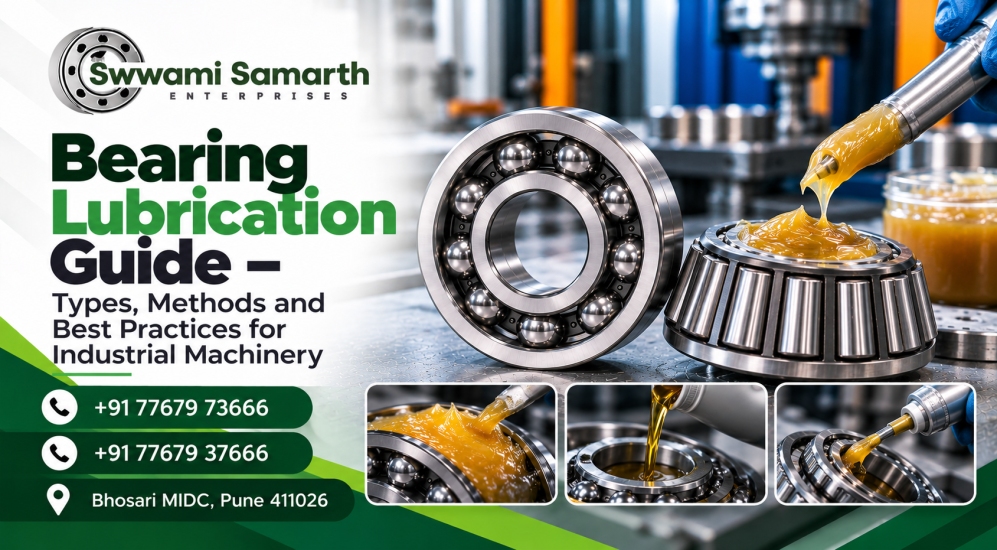
Bearing Lubrication: Types, Methods and Best Practices
Bearing Lubrication is essential for reducing friction, controlling heat and protecting rolling elements inside industrial bearings. The correct lubricant creates a protective film between moving surfaces and helps reduce direct metal-to-metal contact during machine operation.
Bearings operate under different loads, speeds and environmental conditions. Therefore, selecting the right lubricant and applying it correctly are important parts of industrial maintenance. This guide explains common lubrication types, methods and important practices for bearing performance.
What Is Bearing Lubrication?
Bearing Lubrication is the process of supplying a suitable lubricant to the internal contact areas of a bearing. The lubricant forms a film between rolling elements and raceways, helping reduce friction and surface wear.
Depending on the bearing design and application, lubrication may be provided through grease or oil. The correct method depends on operating speed, load, temperature, bearing arrangement and maintenance requirements.
Why Is Bearing Lubrication Important?
Bearings contain rolling elements that move between precision-machined raceways. During operation, these components experience contact forces and friction. Suitable lubrication helps maintain a protective film between the contacting surfaces.
1. Reduces Friction and Wear
A suitable lubricant helps reduce friction between rolling elements and raceways. This supports smoother operation and helps limit surface wear.
2. Helps Control Operating Temperature
Friction can generate heat inside a bearing. Appropriate lubrication helps manage friction-related heat. In circulating oil systems, the lubricant may also help carry heat away from the bearing.
3. Protects Against Corrosion
Suitable lubricants can help protect bearing surfaces from moisture and corrosive contaminants, depending on the lubricant formulation and sealing arrangement.
4. Helps Prevent Contamination
In suitable bearing arrangements, lubricant can help limit the entry or movement of contaminants around internal contact areas. Proper seals and protective components are also important.
5. Supports Reliable Machine Operation
Following the recommended lubrication procedure helps maintain the intended operating conditions and supports consistent machine performance.
Main Types of Bearing Lubrication
Grease Lubrication
Grease lubrication is widely used in many standard bearing arrangements. Grease contains a base oil, thickener and additives. It remains within the bearing area and can provide lubrication over an extended operating period when correctly selected.
Oil Lubrication
Oil lubrication is used in applications where operating speed, temperature or machine design requires a continuous or controlled oil supply. Oil systems can also support heat removal in suitable arrangements.
Grease Lubrication vs Oil Lubrication
Both grease and oil can be suitable for bearing applications, but their properties and supply arrangements are different. The choice should be based on the bearing manufacturer's recommendations and machine operating conditions.
| Parameter | Grease Lubrication | Oil Lubrication |
|---|---|---|
| Lubricant Form | Semi-solid grease | Liquid oil |
| Supply Method | Initial fill or periodic replenishment | Oil bath, circulation or controlled supply |
| Maintenance | Replenishment or replacement as specified | Level, condition and supply monitoring |
| Heat Removal | Limited compared with circulating oil systems | Can support heat removal in circulation systems |
| Typical Use | Many general-purpose bearing arrangements | Suitable high-speed or specialised systems |
Common Bearing Lubrication Methods
1. Manual Grease Lubrication
Grease may be applied manually during installation or maintenance using an appropriate grease gun and lubrication point. The quantity and interval must follow the bearing manufacturer's instructions.
2. Automatic Grease Lubrication
Automatic lubricators supply measured quantities of grease at programmed intervals. These systems can be useful where bearings are difficult to access or where regular replenishment is required.
3. Oil Bath Lubrication
In an oil bath arrangement, part of the rotating bearing or associated component operates in an oil reservoir. The movement distributes oil to the required contact areas. The correct oil level is important for proper operation.
4. Oil Circulation Lubrication
Oil circulation systems continuously or periodically supply oil through a designed lubrication circuit. Depending on the system, the oil may be filtered, monitored and cooled before returning to the bearing.
5. Oil Mist Lubrication
Oil mist systems deliver a controlled oil-air mixture to suitable bearing arrangements. They are used in specific industrial applications and require correctly designed supply and safety systems.
Factors to Consider When Selecting Bearing Lubricant
Bearing Lubrication selection should be based on the bearing design and the machine's actual operating conditions. Consider the following factors before choosing a lubricant.
Bearing speed influences friction, heat generation and lubricant requirements.
Check the temperature range recommended for the lubricant and bearing arrangement.
Radial and axial loads influence the operating conditions of the bearing contact surfaces.
Dust, moisture, chemicals and other contaminants can influence lubricant and sealing requirements.
Different bearing types and internal arrangements may require different lubrication methods.
Always check the recommended lubricant type, quantity and replenishment interval.
How to Apply Bearing Lubrication Correctly
Identify the Bearing
Check the bearing designation, type, dimensions and manufacturer's lubrication instructions.
Select the Correct Lubricant
Choose the specified grease or oil based on speed, load, temperature and application.
Check the Lubrication Point
Ensure the lubrication point and surrounding area are clean before applying lubricant.
Apply the Recommended Quantity
Follow the specified lubricant quantity. Avoid overfilling, which can increase churning and heat generation in some arrangements.
Inspect After Lubrication
Check for leakage, abnormal noise, temperature changes or other unusual operating conditions.
Common Bearing Lubrication Problems
Over-Lubrication
Excessive grease or oil can cause churning, additional friction and increased operating temperature in certain bearing arrangements. Always follow the recommended fill quantity.
Insufficient Lubrication
Inadequate lubricant supply can increase friction and wear. Check the lubrication system and replenishment schedule if the bearing shows signs of insufficient lubrication.
Using the Wrong Lubricant
A lubricant that does not match the bearing's speed, load or temperature requirements may affect performance. Verify compatibility and manufacturer recommendations before use.
Mixing Incompatible Greases
Different grease formulations may not be compatible. Mixing them without checking compatibility can affect consistency and lubrication performance. Follow manufacturer guidance when changing grease types.
Contaminated Lubricant
Dust, moisture and foreign particles can enter the lubrication system. Maintain clean storage, handling and application practices.
Do not use one universal lubrication interval for every bearing. Replenishment frequency and lubricant quantity depend on bearing size, speed, load, temperature, environment and manufacturer recommendations.
Bearing Lubrication Maintenance Checklist
- Check lubricant condition and supply regularly.
- Inspect lubrication points for leakage or blockage.
- Keep grease guns, containers and tools clean.
- Follow the recommended lubricant quantity.
- Check bearing temperature and operating noise.
- Inspect seals and protective components.
- Record lubrication activities during maintenance.
- Use only compatible and approved lubricants.
Frequently Asked Questions About Bearing Lubrication
1. Why is Bearing Lubrication necessary?
It helps reduce friction, control heat, protect contact surfaces and support reliable bearing operation.
2. Which is better for bearings: grease or oil?
Neither is universally better. The correct choice depends on bearing design, operating speed, temperature, load and manufacturer specifications.
3. How often should bearings be lubricated?
Lubrication intervals depend on operating conditions, bearing size, speed and lubricant type. Follow the manufacturer's recommended schedule.
4. Can too much grease damage a bearing?
Excessive grease can cause churning and increased heat in some bearing arrangements. Use the recommended quantity.
5. What happens if a bearing is not lubricated?
Insufficient lubrication can increase friction, heat and wear, potentially reducing bearing operating life.
6. Can different bearing greases be mixed?
Not without checking compatibility. Different grease formulations may react differently. Follow manufacturer recommendations before changing or mixing grease types.
External Technical Resources
Refer to these manufacturer websites for bearing lubrication guidance, product information and technical recommendations.
About Shri Swami Samarth Enterprises
Shri Swami Samarth Enterprises deals in industrial bearings and machinery-related products for different manufacturing and industrial requirements. Understanding bearing specifications and maintenance requirements helps customers identify suitable products for their applications.
Learn more about the company through the About Us page .
Explore More Industrial Articles
Explore more informative content about industrial bearings, bearing selection and machinery components in our Articles section .
Need Help with Industrial Bearing Requirements?
Contact Shri Swami Samarth Enterprises to discuss your bearing number, dimensions and industrial application requirements.
Contact Us