
Bearing Maintenance Tips for Industrial Machinery – How to Extend Bearing Life
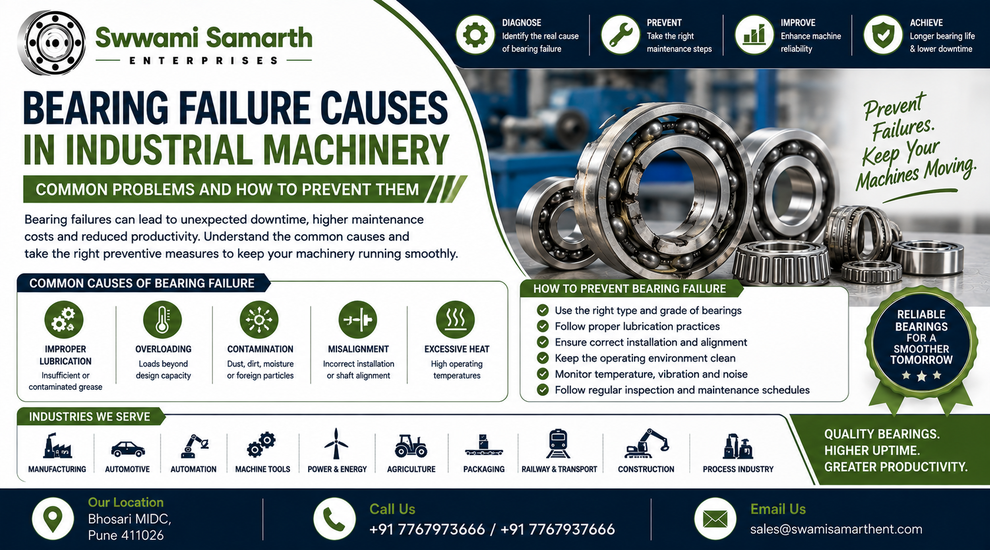
Bearings are continuously exposed to load, rotation, friction and operating conditions inside industrial machinery. Even a good-quality bearing can face premature wear if it is not properly installed, lubricated and maintained.
For industries where machines run for long hours, regular bearing maintenance is not something that should be ignored. A small bearing issue can gradually develop into vibration, overheating, noise and eventually an unexpected machine breakdown.
Following practical bearing maintenance tips for industrial machinery can help maintenance teams identify early problems, improve equipment reliability and reduce unnecessary bearing replacement costs.
Why Is Bearing Maintenance Important?
Industrial bearings support rotating shafts and help different machine components move smoothly. When a bearing is working correctly, friction and unwanted movement are controlled.
However, continuous operation without inspection can allow small issues to become major failures. Proper maintenance helps identify lubrication problems, contamination, misalignment and abnormal vibration before they seriously affect the machine.
A planned maintenance approach is generally better than waiting for a bearing to fail during production.
Important Bearing Maintenance Tips for Industrial Machinery
1. Use the Correct Lubricant
Lubrication is one of the most important parts of bearing maintenance. The lubricant reduces friction between the bearing’s moving surfaces and helps control heat generated during operation.
The correct grease or oil should be selected according to the bearing type, speed, load, temperature and operating environment.
Using too much lubricant is also not a good practice. Excessive grease can increase resistance and temperature, particularly in high-speed applications.
2. Follow a Regular Lubrication Schedule
Bearings should be lubricated according to the manufacturer’s recommendations and the actual operating conditions of the machine.
Maintenance teams should keep track of lubrication intervals instead of adding grease only when a problem becomes noticeable.
A proper lubrication schedule can help maintain consistent bearing performance and reduce the risk of lubricant-related damage.
3. Keep Bearings Clean
Dust, dirt, water and metal particles can affect bearing surfaces and accelerate wear. This is especially important for machinery operating in dusty factories, construction environments or areas exposed to moisture.
Keep the bearing, housing and surrounding area clean during inspection and maintenance. Clean tools and proper handling practices can also reduce the possibility of contamination.
Check Bearing Condition Regularly
Monitor Noise and Vibration
Changes in machine noise or vibration can indicate that something is not working properly. A bearing may produce unusual sounds because of wear, insufficient lubrication, contamination or other mechanical issues.
Regular vibration and noise monitoring can help maintenance teams identify developing problems before they result in a complete bearing failure.
Check Operating Temperature
Temperature is another useful indicator of bearing condition. If a bearing is running hotter than normal, the reason should be investigated.
Possible causes may include excessive load, lubrication problems, misalignment or operating conditions beyond the bearing’s suitable range.
Instead of simply replacing the bearing, maintenance teams should identify the reason for the temperature increase.
Inspect Shaft and Housing Conditions
A bearing does not work independently. It operates together with the shaft, housing and other machine components.
If the shaft surface is damaged or the housing is not in suitable condition, the bearing may not operate correctly. Improper fits can also affect load distribution and bearing performance.
During maintenance, inspect the shaft, housing, seals and mounting surfaces along with the bearing itself.
Maintain Proper Alignment
Misalignment can create uneven loading inside the bearing. Over time, this may contribute to premature wear, vibration and increased operating temperature.
During maintenance or machine installation, check the alignment of shafts and connected components. Correct alignment can help the bearing operate under more suitable load conditions.
This is particularly important in machinery where shafts, couplings and rotating components operate continuously.
Avoid Overloading the Bearing
Every bearing has its own load capacity and operating limits. Running a machine under excessive load can increase stress on the bearing and shorten its service life.
If a machine’s operating conditions change, the bearing should be reviewed to make sure it is still suitable for the application.
When selecting a replacement bearing, consider both radial and axial loads rather than selecting only by dimensions.
Handle Bearings Carefully During Installation
A new bearing can be damaged during installation if the correct procedure is not followed.
Avoid unnecessary impact, contamination and excessive force. Use appropriate tools and make sure the bearing is mounted correctly on the shaft and inside the housing.
Improper installation can create damage that may not be immediately visible but can later result in noise, vibration and premature failure.
Store Replacement Bearings Properly
Bearing maintenance also includes proper storage of spare bearings.
Replacement bearings should be protected from moisture, dust and unnecessary handling. Keep them in suitable packaging until they are required for installation.
Avoid storing bearings in conditions where they can be exposed to excessive humidity or contamination.
Good storage practices help ensure that a replacement bearing is in proper condition when it is finally needed.
When Should an Industrial Bearing Be Replaced?
Not every noisy or warm bearing needs immediate replacement without inspection. First identify the condition and possible reason behind the abnormal behaviour.
However, replacement may be required when there is:
-
Severe surface damage
-
Excessive wear
-
Cracks or visible defects
-
Abnormal looseness
-
Persistent overheating
-
Severe vibration
-
Repeated lubrication-related problems
-
Damage caused by contamination
When replacing a bearing, it is important to investigate why the previous bearing failed. Otherwise, the new bearing may face the same operating problem.
Bearing Maintenance Is More Than Lubrication
Lubrication is important, but effective industrial bearing maintenance involves several activities working together.
Maintenance teams should consider:
-
Regular inspection
-
Lubrication management
-
Alignment checks
-
Load monitoring
-
Temperature monitoring
-
Vibration monitoring
-
Proper installation
-
Contamination control
-
Correct storage
-
Timely replacement
A complete maintenance routine helps businesses move from reactive repairs towards more planned machine maintenance.
Choosing the Right Bearing for Better Performance
Maintenance alone cannot compensate for an incorrectly selected bearing. The bearing should match the machine’s actual operating requirements.
Depending on the application, industries may require deep groove ball bearings, spherical roller bearings, tapered roller bearings, cylindrical roller bearings, needle roller bearings, angular contact ball bearings, thrust bearings or other specialised bearing types.
Before ordering, check:
-
Bearing dimensions
-
Radial and axial load
-
Operating speed
-
Temperature
-
Machine application
-
Lubrication requirements
-
Environmental conditions
-
Expected operating life
Selecting a suitable bearing from a reliable source can make maintenance more predictable.
Supporting Products for Industrial Maintenance
Industrial machinery often requires more than just bearings for smooth operation.
Bearing Accessories
Bearing housings, pillow block housings, adapter sleeves, withdrawal sleeves, lock nuts, lock washers and locating rings can support proper bearing mounting and maintenance.
Power Transmission Products
V-belts, timing belts, taper lock pulleys and industrial couplings are commonly used alongside rotating machinery. These components should also be inspected as part of overall equipment maintenance.
Industrial Oils and Grease
Hydraulic oil, gear oil, compressor oil, industrial lubricant oil and grease are important for different machinery applications. Using the appropriate lubricant helps support smooth machine operation.
How a Reliable Bearing Supplier Can Support Maintenance
For industries, sourcing the correct bearing at the right time is an important part of maintenance planning.
A reliable industrial bearing supplier can provide different bearing types and related components based on application requirements. Availability of commonly required sizes can also help businesses reduce delays when replacement is necessary.
For regular maintenance, it is useful to work with a supplier who understands bearing specifications and can help identify suitable products instead of simply supplying a bearing based on a part number.
Conclusion
Proper bearing maintenance can make a significant difference to industrial machinery performance. Regular lubrication, cleanliness, alignment checks, load management, temperature monitoring and correct installation can help reduce premature bearing problems.
The main goal of maintenance should not be simply to replace bearings after failure. It should be to understand machine conditions, identify early warning signs and take preventive action.
With the right maintenance routine and application-appropriate bearings, industries can improve equipment reliability and reduce unnecessary downtime and replacement expenses.
FAQs
1. How often should industrial bearings be maintained?
The maintenance interval depends on the bearing type, machine application, operating speed, load, temperature and manufacturer’s recommendations.
2. What is the most important part of bearing maintenance?
Proper lubrication, regular inspection, correct installation and maintaining suitable operating conditions are all important for bearing performance.
3. Can proper lubrication extend bearing life?
Yes. Using the correct lubricant in the correct quantity and at suitable intervals can help reduce friction and wear.
4. What are the signs that a bearing needs inspection?
Unusual noise, increased vibration, overheating, excessive looseness and changes in machine performance are common warning signs.
5. Why do bearings fail even after replacement?
The underlying problem may not have been corrected. Overloading, misalignment, contamination, incorrect lubrication or improper installation can cause a replacement bearing to fail again.
6. How do I select the right industrial bearing?
Consider the bearing dimensions, load, speed, temperature, application, environment and lubrication requirements before selecting a bearing.
Looking for industrial bearings and bearing maintenance products for your machinery?
Shri Swami Samarth Enterprises supplies industrial bearings, bearing accessories, power transmission products, linear motion solutions and industrial lubricants for different machinery requirements.
Choose the right bearing and maintain it correctly for smoother operation, better reliability and reduced maintenance interruptions.